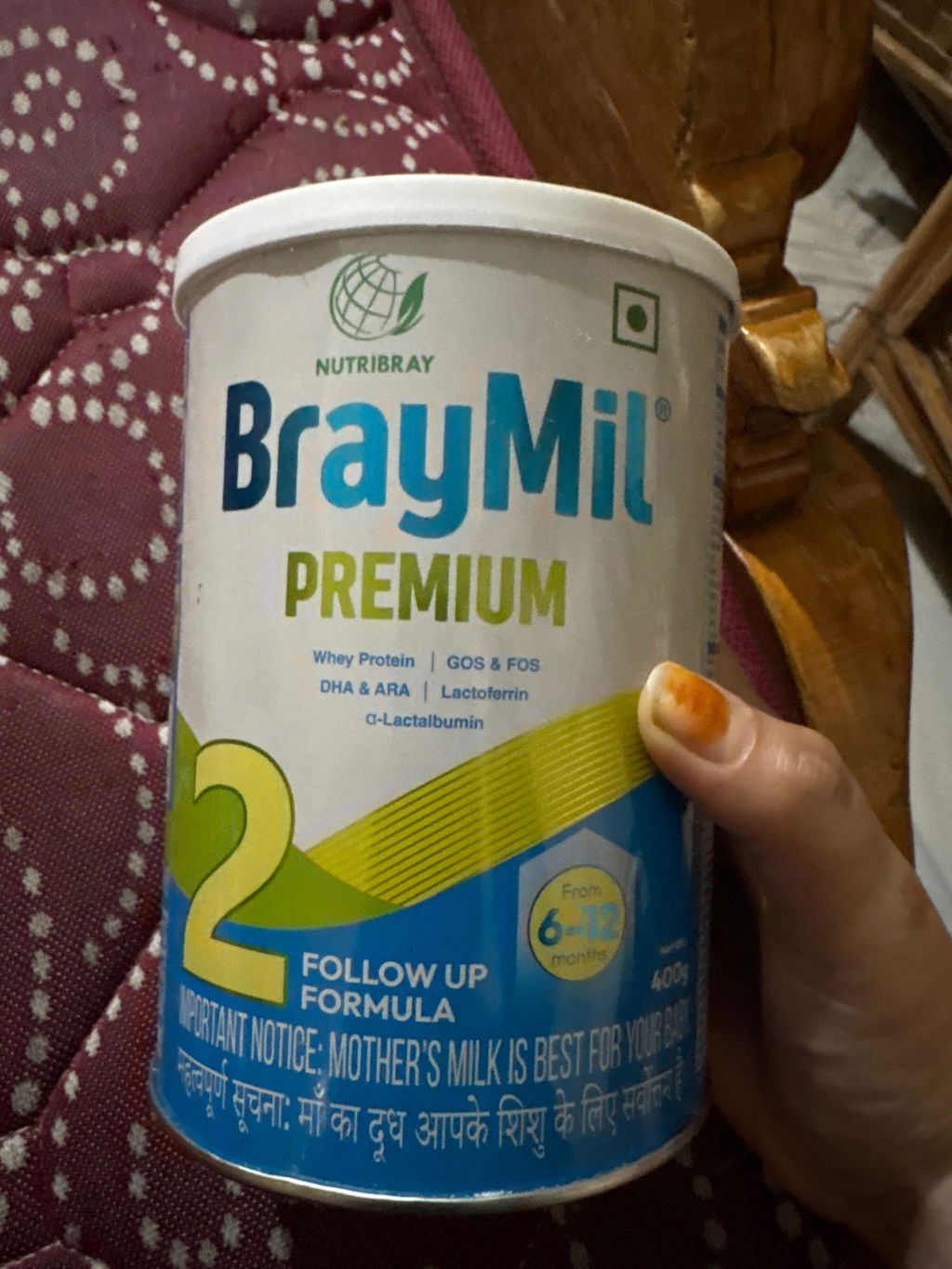
Braymil Premium 2 Follow Up Formula - follow-up formula for babies 6 to 12 months
Braymil Premium 2 Follow Up Formula is a powdered follow-up formula for babies from 6 to 12 months, containing DHA, ARA, GOS, and FOS, in a 400g tin pack.
Formulated for the 6-to-12-month window, this product is designed to be used alongside complementary foods rather than as a sole source of nutrition, and its composition follows India’s infant nutrition standards for follow-up formula, with added DHA, ARA, and a GOS/FOS prebiotic blend.
Follow-up formula should be introduced only on the advice of a health worker, and any change in your baby’s feeding plan around the 6-month mark should be discussed with your paediatrician first.
At a Glance
|
Attribute
|
Detail
|
|
Age / Stage
|
6 to 12 months (Stage 2 / Follow-Up)
|
|
Format
|
Powder, 400g tin pack
|
|
Protein base
|
Whey-dominant
|
|
Key additions
|
DHA, ARA, GOS, FOS, calcium, iron, zinc
|
|
Use case
|
Liquid part of a complementary diet for babies transitioning to solids
|
|
Medical supervision
|
Recommended
|
Key Ingredients
|
Ingredient
|
What it supports
|
|
Whey protein
|
Core protein supply for growth and tissue development
|
|
DHA (docosahexaenoic acid)
|
An omega-3 fatty acid present in breast milk and involved in early brain and visual development
|
|
ARA (arachidonic acid)
|
An omega-6 fatty acid present in breast milk alongside DHA, involved in cell membrane structure and early development
|
|
GOS and FOS (prebiotic blend)
|
Non-digestible carbohydrates that support the growth of beneficial gut bacteria such as bifidobacteria
|
|
Calcium
|
Supports bone and teeth development, both increasingly active at this age
|
|
Iron
|
Supports blood formation during continued rapid growth
|
|
Zinc
|
Supports normal growth and immune function
|
Evidence on DHA and ARA in infant and follow-up formula is mixed: Cochrane systematic reviews have found some positive effects on visual function and specific areas of cognition in individual trials, but have not been able to recommend routine supplementation as a whole based on the available randomised trial data. GOS and FOS have more consistent trial support: a recent systematic review and meta-analysis found that formula supplemented with a GOS/FOS blend was associated with higher levels of beneficial gut bacteria, softer and more frequent stools, and lower stool pH compared to standard formula.
How to Prepare
-
Wash your hands with soap and water before touching formula or feeding equipment.
-
Clean and sanitize your prep area, bottles, nipples, and mixing tools.
-
Boil water if your source is not confirmed safe, then let it cool before mixing.
-
Measure the water first, using the exact amount printed on the label.
-
Add the powder using the scoop that came with this specific tin, levelling it off rather than packing it down.
-
Mix thoroughly by swirling or gently shaking until fully dissolved.
-
Warm the bottle only if your baby prefers it, using warm running water or a bottle warmer, and test the temperature on your wrist first.
-
Feed within 2 hours of preparing the bottle, or refrigerate immediately if not using it right away.
A full breakdown of formula prep steps and timing limits is available separately for parents who want the complete safety guide.
Storage
-
Store unopened tins in a cool, dry, indoor spot, never in a car, garage, or direct sunlight.
-
Once opened, keep the tin tightly sealed at room temperature, not in the fridge.
-
Use the opened tin within about a month of opening; check the exact window printed on the label.
-
Refrigerate a prepared bottle immediately if not used within 2 hours, and use it within 24 hours.
-
Once feeding begins, finish the bottle within 1 hour and discard any leftover formula.
Manufactured By
Nutribray Healthcare Pvt. Ltd., India
FSSAI Lic. No. 10823005000489 | BIS/ISI Certified | GMP Certified
Frequently Asked Questions
What is the difference between an infant formula and a follow-up formula?
Infant formula is designed for the first 6 months and can serve as a baby’s primary source of nutrition. Follow-up formula is intended for use alongside solid foods once complementary feeding has begun, as part of a broader diet rather than the sole source of nutrition.
Why does my baby need more iron and calcium at this stage?
Between 6 and 12 months, babies grow rapidly and begin building bone density and blood volume faster than in the newborn period, which increases their requirement for these nutrients.
What are GOS and FOS, and why are they added?
GOS and FOS are prebiotic carbohydrates that are not digested in the small intestine. Instead, they reach the colon and support the growth of bacteria like bifidobacteria, which research has linked to stool patterns closer to those seen in breastfed infants.
Does DHA and ARA in follow-up formula still matter after 6 months?
Brain development continues rapidly through the first and second years, so these fatty acids remain part of the nutrient profile at this stage, though the strength of clinical evidence for measurable benefit from supplementation specifically is mixed.
Can this formula replace meals if my baby isn’t eating much solid food yet?
Follow-up formula is meant to be part of a complementary diet, not a replacement for it. If your baby is eating very little solid food at this stage, speak with your paediatrician about their overall feeding plan.
How do I know if this formula is right for my baby’s needs at this age?
Every baby’s tolerance, growth rate, and dietary needs differ. A paediatrician can confirm whether this formula fits your baby or whether a different formulation is more appropriate.
We offer reliable and fast delivery across India. Orders are processed within 24–48 hours.
Returns are accepted within 7 days of delivery for unused products in original packaging.